













Own your newsletters list. Stop paying by the subscriber. Bring Newsletters In-House!
Email is one of the highest-ROI channels in e-commerce. It’s also home to one of the most overlooked recurring costs a growing store carries. We want to walk you through a real migration we did — what the numbers looked like, how we moved everything without breaking deliverability, and how to decide whether the same move makes sense for you.
The problem nobody notices until the invoice grows
Here’s the thing that has always bothered us about most hosted email platforms: you get charged more for succeeding.
Pricing is tied to the size of your list. So every time a campaign works, every time a popup converts, every time a customer checks the “keep me updated” box — your monthly bill goes up. You’re being taxed on your own growth, whether or not those subscribers ever open a single email.
For a small list, it’s invisible. At a few thousand contacts, the fee is a rounding error. But it scales quietly, and one day you look at the invoice and realize your newsletter tool has become one of your larger fixed software costs.
That’s exactly where our client found themselves.
Meet the client
A WooCommerce store — solid traffic, a real product catalog, and a genuinely healthy email program. They’d done everything right: grown their list to around 25,000 subscribers, sent regular campaigns, and built real revenue from email.
The reward for that success? Their hosted platform’s bill had climbed past ~$200 a month, and it went up with every new signup. They weren’t misusing the tool. They were simply growing — and the pricing model turned that growth into an ever-increasing line item.
When they came to us, the question was simple: “We love email. We don’t love paying more every month just for having more subscribers. Is there another way?”
There was.
What we moved them to
We moved them to a self-hosted newsletter system running inside their own WordPress, using the plugin we’ve spent the last while building: Amazing WordPress Newsletters.
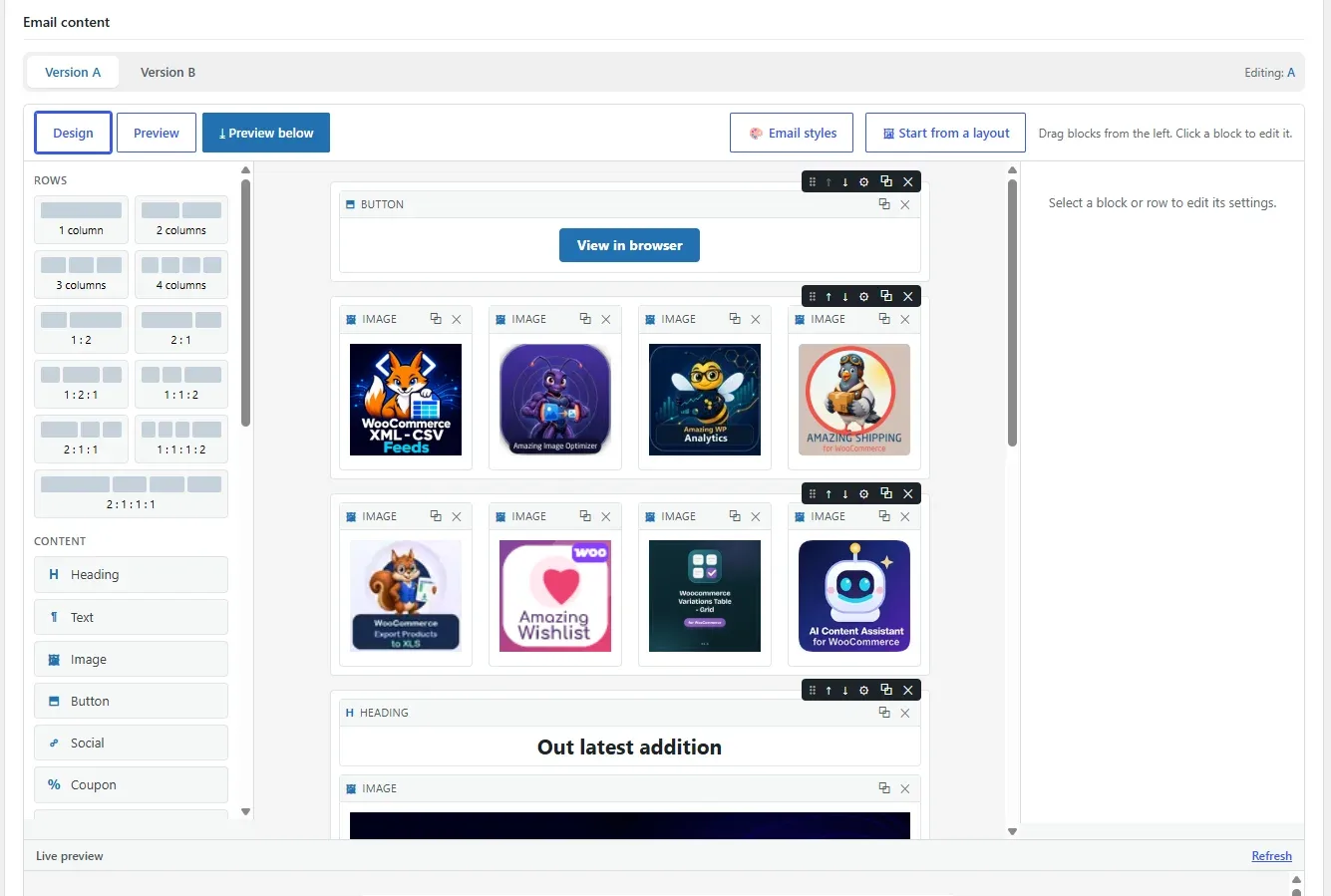
The core idea is straightforward. Instead of renting an email platform that charges by headcount, you run the marketing software on your own site and send through a raw email provider (like Amazon SES or any SMTP service) that charges by the email — fractions of a cent each. The subscriber count stops being a billing metric entirely.
But cheaper only matters if nothing breaks. So here’s how we actually did it.
The migration, step by step
1. Exported and imported the list — cleanly
We exported their subscribers from the old platform as a CSV, then imported them into the plugin, mapping them to the right lists on the way in. Large imports run in batches with a progress bar, so a 25,000-row file doesn’t time out or choke the server. Unsubscribes and bounced addresses came across too, so nobody who had opted out ever got contacted again.
2. Set up deliverability before sending anything
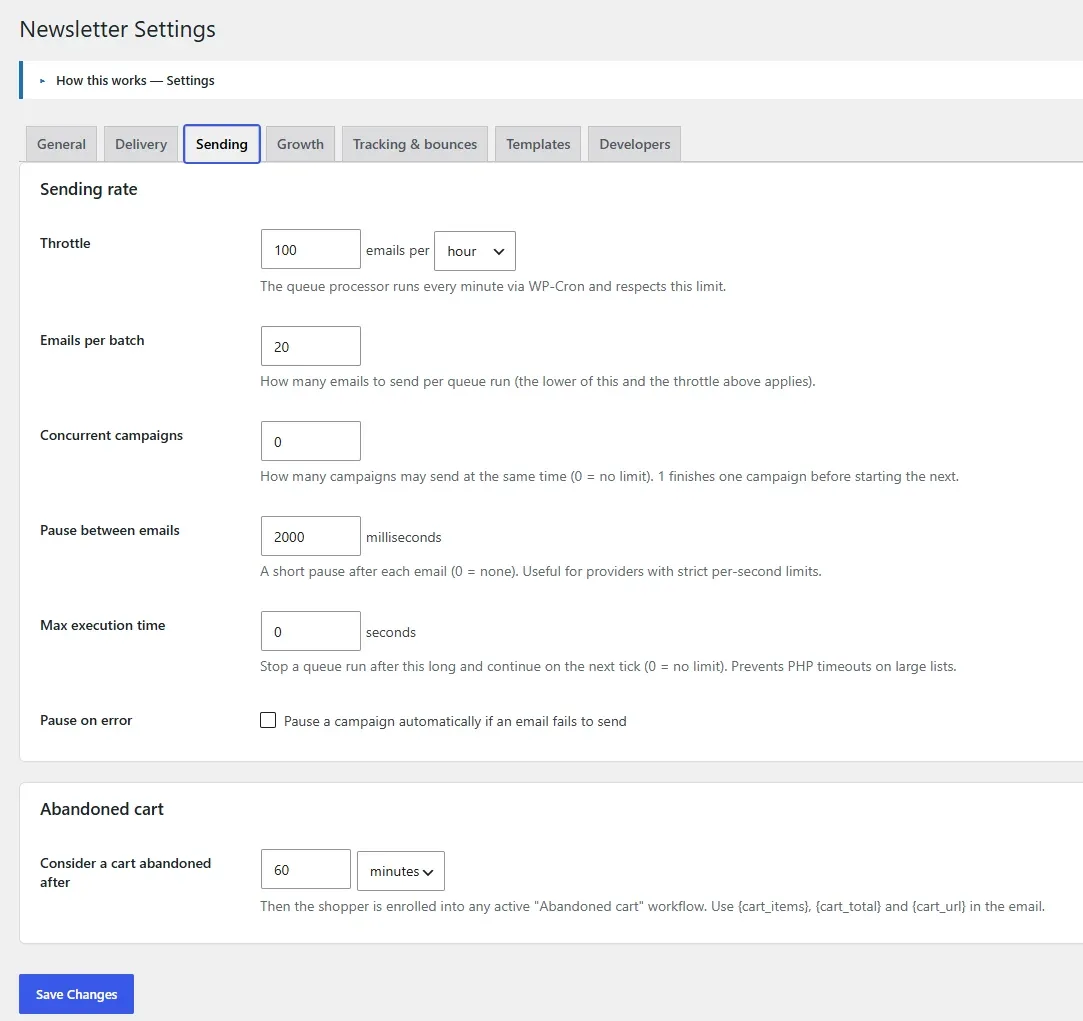
This is the step people skip and regret. Moving providers means email now leaves from a new place, and mailbox providers (Gmail, Outlook, etc.) are suspicious of that by default.
So we configured authentication properly:
- SPF, DKIM, and DMARC records for their sending domain — the three checks that tell Gmail “yes, this sender is legitimate.” The plugin flags on its settings screen when any of these are missing, which made verifying it painless.
- Connected Amazon SES as the send path, using their own credentials (stored encrypted), on a verified domain.
3. Warmed up and tested
We didn’t blast 25,000 emails on day one from a brand-new setup. We ramped volume gradually so the sending reputation built up cleanly, and we used the plugin’s pre-send spam-score check and browser preview on every campaign to catch issues — a missing unsubscribe link, an image-heavy layout, a spammy subject — before hitting send, not after.
4. Rebuilt the workflow so it felt familiar
We recreated their templates in the drag-and-drop builder, wired up their signup forms, and set their automations back up. The goal was that on the first Monday after the switch, their marketer sat down and everything felt normal — same kind of builder, same reports, same rhythm.
The results
The recurring fee effectively disappeared.
| Before (hosted platform) | After (self-hosted) | |
|---|---|---|
| Monthly cost | ❌ ~$200 and climbing | ✅ ~$10–15 in send fees |
| Pricing basis | ❌ Per subscriber | ✅ Per email sent |
| Cost when the list grows | ❌ Goes up | ✅ Stays flat |
| Data ownership | ❌ On their platform | ✅ In their own database |
That’s a reduction of more than 90% on the recurring cost — and, just as importantly, the cost no longer rises just because the list does.
But the money was only part of it:
- They own their data again. The list, the campaigns, the full history — all in their own database. No export limits, no middleman, no lock-in. That ownership matters more than most people realize until the day they want to leave a platform and find they can’t do it easily.
- Nobody had to downgrade. Drag-and-drop builder, automations, A/B testing, segmentation, signup forms, deliverability checks, spam scoring, throttled background sending. The day-one workflow felt familiar, not like a compromise.
- They can finally see the money. Because it’s native to WooCommerce, every campaign now shows the actual revenue it generated — not just opens and clicks. That single view changed how they plan their sends. When you can see that one newsletter drove real orders, you stop guessing and start doubling down on what works.
Let’s be honest about the trade-offs
We’re not going to tell you hosted platforms are bad. They’re the right call for a lot of businesses, and there are real things you take on when you bring email in-house:
- You own deliverability. No support team is quietly protecting your sending reputation for you. Done right (proper authentication, gradual warm-up, clean list hygiene) this is a non-issue — but it’s on you.
- You need reliable sending infrastructure. An SMTP or SES account, and a WordPress cron that actually runs so the queue keeps moving.
- Setup takes a bit of care up front. The migration is a one-time effort; the savings are ongoing.
For a store that already lives on WordPress and has a list worth real money, that trade is usually an easy yes. For someone with 500 subscribers and no technical appetite, a free hosted tier is probably still the smarter choice.
The math that actually matters
Here’s the simple test we’d offer anyone weighing this up:
If your email platform’s bill goes up every time your list grows, work out what you’ll be paying at 2× your current subscriber count. Then compare that to the flat, per-email cost of sending the same volume yourself. Past a certain list size — often somewhere in the tens of thousands — per-subscriber pricing quietly becomes one of your most expensive line items, and if you’re on WordPress, it’s a cost you may not need to carry at all.
For our client, the answer was obvious the moment we ran that number.
The takeaway
The point of this story isn’t “cancel your email platform today.” It’s that the cheapest, most powerful option is sometimes the one already sitting on your own site — you just have to set it up properly.
Same output. Same team effort. A fraction of the recurring cost. And full ownership of a channel that quietly drives a big share of the sales.
If your email bill climbs every time your list does, it’s worth doing the math. You might be surprised what’s possible on your own WordPress.